
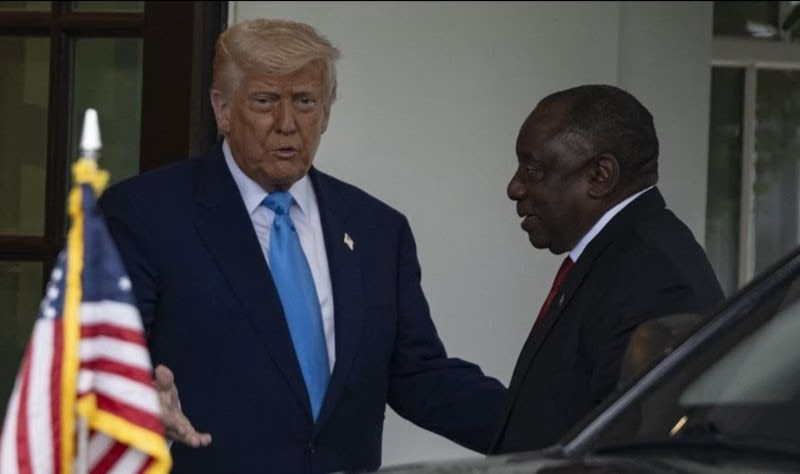
The diplomatic divide between Washington and Pretoria deepened this week after U.S. President Donald Trump announced that South Africa will not be invited to participate in the 2026 G20 summit, scheduled to take place in Miami. The move is unprecedented — and it raises significant questions about the future of multilateral cooperation at a moment when global coordination is needed most.
Trump justified the decision by repeating unsubstantiated claims about South Africa, including allegations of genocide against the minority white community. He further stated that the United States would halt all aid payments and trade-related subsidies to the country.
South Africa’s government described the comments as “regrettable,” attributing them to misinformation and reaffirming the nation’s ongoing role as an active G20 member.
Pretoria responds with commitment to dialogue and cooperation
In an official statement, South Africa emphasized its dedication to multilateral engagement and its intention to continue participating fully in G20 processes. Officials reiterated that the country remains committed to global collaboration on issues such as sustainable development, climate resilience, and fair economic growth.
The government also highlighted that unfounded narratives about violence in South Africa have repeatedly been rejected by independent researchers, civil society organizations, and international partners — and expressed confidence that facts and diplomatic engagement will prevail.
A broader context of strained relations
The announcement follows a U.S. boycott of the recent G20 summit hosted by South Africa, signaling a pattern of diplomatic tension between the two governments. While the practical enforcement of Trump’s proposed exclusion remains uncertain, no other G20 member state has publicly supported the ban.
The decision comes at a moment when African nations have been gaining greater influence on global economic platforms. South Africa, for example, has been championing broader representation for developing countries, improved financing systems, and equitable trade partnerships — priorities strongly supported across the African Union and the Global South.
What this moment means for global cooperation
The dispute touches on a much larger question: What is the role of the G20 in a rapidly shifting world order?
If a single country can remove another from the table, the foundational principle of collective governance is challenged. For many observers, the situation underscores the need to protect inclusive global forums where nations — large and small — address shared challenges together.
For African nations, the outcome of this dispute also carries symbolic weight. South Africa’s continued participation is seen as essential to ensuring the continent’s voice is not diminished in conversations about climate responsibility, debt relief, digital transformation, and investment.
Looking ahead
Although the controversy introduces uncertainty, South Africa has made it clear that it will not step back from the G20 or abandon the values of open dialogue and partnership. Whether this diplomatic rift deepens or becomes an opening for renewed engagement remains to be seen.
What is certain is that the world will watch closely — because the future of multilateralism may well be shaped by how this moment unfolds.